
Savings and investment are important elements both for the financial well-being of individuals and for the economic growth of a State. In many countries, governments seek to encourage citizens to save more — or better — to promote formal savings mechanisms over informal savings and to support greater diversification of investments. However, limited access to financial markets for certain groups, the complexity of financial products and information asymmetry all constitute significant obstacles to saving.
In addition, limited knowledge and poor understanding of savings and investment concepts, combined with behavioural and cultural factors, may reduce households’ propensity to save.
Against this backdrop, public authorities have developed various strategies to encourage saving among the population.
These strategies generally combine prudential regulation and consumer protection legislation, as well as financial incentives, financial education programmes and awareness campaigns, designed to encourage individuals to make informed savings decisions.
This article presents the key points illustrating why financial education is an important lever for boosting public savings.
THE CURRENT STATE OF FINANCIAL EDUCATION IN THE WAEMU REGION
As defined by the OECD Council in June 2005, financial education is the process through which consumers and investors improve their understanding of financial products, concepts and risks, and acquire — through information, instruction or objective advice — the skills and confidence needed to become more aware of financial risks.
The broader concept extends financial education to the population as a whole and includes cultural and less practical dimensions, namely understanding the economic and financial environment in which people live.
Although some initiatives have been launched in the field of financial education, the situation in the WAEMU region highlights the following realities:
- a low literacy rate, associated with a low level of financial knowledge. In the WAEMU area, adult literacy stands at 44%. This figure reflects both rural and urban populations, many of whom have low or no literacy;
- the absence of a coherent coordination framework for financial education initiatives. In most countries, several institutions provide financial education in isolation. Collectively, these include state bodies in charge of financial inclusion, professional associations in the decentralised financial system, public implementation entities, specialised NGOs and consumer protection associations;
- a lack of technical expertise: the WAEMU region does not yet have enough experts or trainers to address the financial education challenge, especially for low-income populations;
- insufficient financial resources to undertake financial education initiatives: financial education is not yet clearly defined in the public policies of the Union’s Member States.
HOW FINANCIAL EDUCATION CAN IMPACT PUBLIC SAVINGS
Financial education can make a major contribution to improving public savings. In order to better mobilise savings and channel them more effectively towards the development of the WAEMU economy, providing financial education to populations is a necessary precondition.
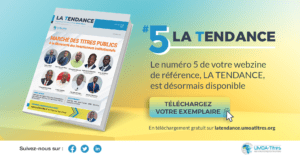
This is, moreover, one of the missions of SOAGA (West African Asset Management Company), the first regional financial institution specialising in asset management, created by the West African Development Bank (BOAD). In the fifth issue of our web magazine LA TENDANCE, Mr Jean François BROU, Chief Executive Officer of SOAGA, provides an analysis of this issue.
According to Mr Jean François BROU, SOAGA firmly believes that public savings management is a major issue for the economic and financial stability of States in the WAEMU region. Financial concepts must therefore be explained in a multidimensional language, adapted to each person’s level of understanding, in order to encourage stronger engagement from populations. The goal is to make information accessible to as many people as possible, thereby enabling them to make better decisions.
The existence of major obstacles to saving — such as limited knowledge and understanding of savings concepts — shows that financial incentives and financial education programmes can undoubtedly help improve the mobilisation of savings and make better use of those resources for the development of our economic area.
WHAT ACTIONS CAN HELP BOOST FINANCIAL EDUCATION IN THE WAEMU REGION?
Judging by the current situation, although the WAEMU region has made progress in improving access to financial services in recent years, additional measures still need to be taken in order to improve the population’s level of financial knowledge.
According to the BCEAO, in its Regional Financial Education Programme in WAEMU, these actions should include in particular:
Integrating financial education into primary, secondary and university curricula
This would involve the following actions:
- designing financial education courses to be taught. This includes developing the curriculum content to be delivered to students. In this context, the BCEAO may cooperate with countries to implement this through the CNSMO¹ and the Financial Education Working Group, by recruiting consultants;
- integrating financial education courses into school curricula. The technical and financial responsibility for such integration would lie with each Member State of the Union. To do so, States may establish partnerships and seek technical and financial assistance to implement and monitor this activity.
Training national education and higher education stakeholders in financial education
The activities carried out under this action include:
- developing teaching tools (manuals) for financial education. These manuals would be intended for both teachers and learners;
- training staff in financial education courses and tools. This refers to the training structures responsible for preparing teachers in line with financial education standards and manuals. The responsibilities of the CNSMO (National Committees for Monitoring and Implementation) and the Working Group include ensuring the technical implementation of these various train-the-trainer programmes. In this regard, they must define the required profiles and identify the structures likely to benefit from such training.
Organising financial education awareness initiatives in schools and universities
Carrying out this action would likely require:
- organising meetings between finance professionals;
- organising exchanges between financial services consumers and learners in schools and universities.
This action would be implemented under the technical and financial responsibility of each country. Indeed, countries may draw on global, regional or national events as opportunities to bring together finance professionals, financial consumer organisations and learners from schools and universities.
To learn more about financial education for populations in the WAEMU region, continue reading by downloading the fifth issue of LA TENDANCE here.
CNSMO¹: The National Committee for Monitoring and Implementation (CNSMO) of the Regional Financial Inclusion Strategy in WAEMU is responsible for monitoring the implementation of the roadmap and has been established in each Member State of the Union. Its mission is to ensure coordination and synergy between actions identified under the Projects and those carried out at the level of each Member State of the Union.